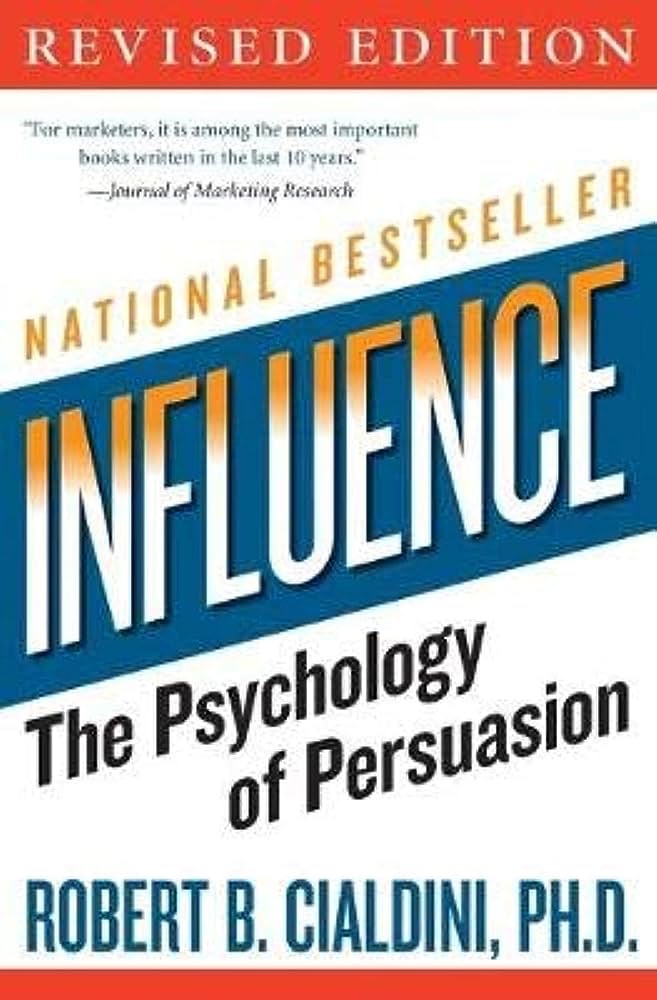
Unravel the mysteries behind why people say “yes.” With over 3 million copies sold globally, Cialdini’s book dives into the psychology of influence, offering profound insights into consumer behavior and persuasion tactics.

Robert B. Cialdini’s seminal work, “Influence: The Psychology of Persuasion,” has stood as a beacon in understanding the intricate mechanisms behind human decision-making and persuasion.
Celebrated for its accessible insights into the psychology of influence, this book has been a cornerstone for marketers, psychologists, and business professionals seeking to decode the art of persuasion.
However, beneath the surface of acclaim lies a discourse waiting to be explored—a critical examination seeking to unravel the complexities and limitations of Cialdini’s theories. This article ventures into an analysis that transcends the laudable aspects of “Influence” to shed light on its technical shortcomings, ethical considerations, and the evolving landscape of persuasion in the contemporary world.
As we delve deeper, it becomes evident that while “Influence” has undoubtedly contributed profoundly to our understanding of persuasion, it is not immune to scrutiny. This critical exploration aims to dissect the book’s premises, question its universal applicability, and address concerns regarding its ethical implications and relevance in an era of rapidly evolving digital dynamics.
Join me on this analytical journey as we navigate through the layers of “Influence: The Psychology of Persuasion,” seeking to uncover not only its brilliance but also its limitations and the discourse it has sparked within the realms of psychology, marketing, and ethics.
Simplified and Overgeneralized Concepts

Cialdini’s work tends to oversimplify complex psychological phenomena. The book condenses intricate psychological theories into easily digestible principles, potentially leading to oversimplification of human behavior. This simplification might not capture the entirety and nuances of the psychological processes involved in persuasion.
Ethical Implications of Manipulation
The book has faced scrutiny regarding its implications for ethical persuasion versus manipulation. Some critics assert that the tactics outlined in the book could potentially be misused for manipulative purposes rather than ethical persuasion. The fine line between ethical influence and manipulative tactics is often a point of contention among critics.
Limited Emphasis on Cultural Variances
The book’s limited attention to cultural variations in persuasion. The principles outlined in the book are primarily based on studies conducted in Western cultures, potentially disregarding the diverse range of cultural nuances that affect persuasion techniques and their effectiveness in different societies.
Limited Focus on Contemporary Dynamics
With the book first published in the 1980s, critics argue that it may lack relevance in today’s rapidly evolving digital landscape. The dynamics of persuasion have significantly transformed with the advent of the internet, social media, and new communication channels, potentially rendering some of the book’s principles less applicable or in need of contextual updating.
Lack of Comprehensive Academic Rigor
While the book synthesizes various psychological studies, some academics argue that it lacks the depth and comprehensive rigor expected in scholarly works. Critics suggest that certain claims and conclusions could benefit from more empirical evidence or a broader scope of research.
Overemphasis on Fixed Principles
The book presents its principles of influence as somewhat fixed and universally applicable, whereas critics argue that the context and situational factors play a significant role in the effectiveness of persuasion techniques. This overlooks the fluid and contextual nature of human decision-making processes.
It’s important to note that while “Influence” has garnered widespread acclaim and has been influential in marketing and psychology, these criticisms highlight areas where further analysis or contextualization might be warranted to fully understand the complexities of human persuasion.
In conclusion, the critical examination of “Influence: The Psychology of Persuasion” by Robert B. Cialdini has unveiled both the brilliance and the limitations inherent in this seminal work. While Cialdini’s book remains a foundational text in understanding the psychology behind influence and persuasion, it is not without its shortcomings.
The analysis has highlighted concerns about oversimplification, potential ethical implications, cultural limitations, and the need for contextual relevance in today’s rapidly evolving digital landscape. These criticisms invite further exploration and dialogue, urging a deeper understanding of the complexities of human decision-making and the ever-shifting dynamics of persuasion.
Despite the critique, it’s important to acknowledge the enduring impact of “Influence.” Its principles have provided a framework for understanding persuasive techniques, sparking conversations across various disciplines and paving the way for further research and refinement in the field.
Ultimately, this critical examination serves as an invitation—not to dismiss the book’s contributions but to view them through a nuanced lens, recognizing the need for continual reassessment and contextual adaptation. As the landscape of persuasion evolves, so must our understanding of its intricacies, and Cialdini’s work stands as a foundational stepping stone in this ongoing exploration.

 HossamAssaf
Leave a reply to dogdad87 Cancel reply